MLB Game Totals And Weather Effects On Baseball Betting
 Available in US
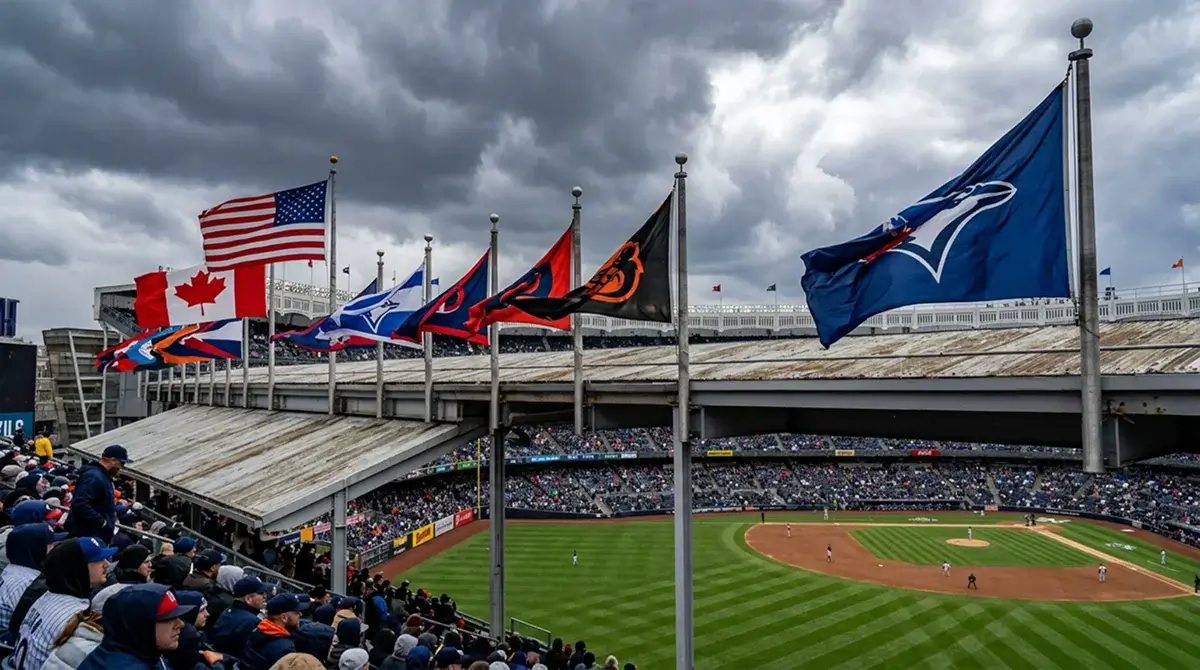
Baseball is played outdoors in open-air stadiums for the majority of its schedule, and the physical properties of a baseball in flight change measurably with temperature, wind, and humidity. This is not a metaphor — it is physics. A ball hit at the same exit velocity and launch angle will travel further in 32-degree heat than in 8-degree cold by roughly 3 to 5 metres. For bettors, that distance is the difference between a warning-track out and a home run, and by extension, the difference between an under and an over.
Live betting now accounts for 53.40% of all online betting activity globally, and weather can shift mid-game. A wind that was blowing in at first pitch can rotate during a three-hour contest, changing the run environment in real time. That dynamic is part of what makes ballpark factors and weather analysis complementary — one gives you the static venue profile, the other adds the day-specific atmospheric overlay.
Run Scoring Impacts From Temperature And Weather
I learned this lesson the expensive way during an early-April slate. Three totals, all unders, all in northern stadiums where the temperature was forecast at 6 degrees Celsius. The logic was sound — cold suppresses offence. Except I had not checked the afternoon forecast closely enough. The first-pitch temperature was 6, but by the fifth inning the sun had warmed the air to 14. Two of three games went over. Temperature at game start is not the same as temperature across all nine innings.
The physics is straightforward. A baseball is made of a cork-and-rubber core wrapped in yarn and covered in cowhide. In cold air, the ball compresses slightly more on contact and the air is denser, creating more drag. Both effects reduce the distance a batted ball travels. In warm air, the ball is livelier off the bat and the reduced air density lets it carry further. Studies — including MLB’s own research — have quantified this at roughly 1.5 additional metres of fly ball distance for every 5.5-degree Celsius increase in temperature.
For betting purposes, the practical threshold I use is 21 degrees Celsius. Below that, I shade my projected total down. Above that, I shade it up. At extremes — games played in July and August heat above 35 degrees — the run-scoring inflation can be substantial, especially in open-air stadiums with no shade over the playing field. Conversely, late-season October games in northern cities can drop below 5 degrees, and run scoring in those conditions falls noticeably below season averages.
Temperature also affects pitchers, though less directly. Cold hands reduce grip, which can diminish spin rate and command. A pitcher who relies on a precise slider might lose a few hundred RPM in freezing conditions, making the pitch less effective. This is harder to quantify than the batted-ball physics, but it is a real factor in early-season and late-season games.
Wind Direction and Speed: Blowing In vs Blowing Out at Key Stadiums
Wind is the single most impactful weather variable for totals betting. A 20 mph wind blowing straight out to center field can inflate scoring by a full run or more in a game. The same wind blowing straight in from center can suppress scoring by a comparable margin. Crosswinds have a lesser but still measurable effect, pushing fly balls toward or away from the foul poles depending on direction.
Not all stadiums are equally wind-sensitive. Parks located near bodies of water — lakes, rivers, oceans — tend to experience stronger and more variable winds. One particular lakefront AL Central stadium is famous for wind patterns that change run environments dramatically from day to day. I have seen consecutive games at the same venue where the total was set at 7 one day and 9.5 the next, entirely driven by wind forecast changes.
The direction matters more than the speed when winds are moderate (8-15 mph). A 10 mph breeze blowing straight out will carry fly balls further than a 15 mph crosswind that mostly pushes balls foul. I check wind direction relative to the stadium’s orientation — specifically, the angle between the wind vector and the line from home plate to center field. Direct out or direct in has the strongest effect. Winds perpendicular to that line are mostly neutral.
For in-play betting, wind is the weather variable most likely to create mid-game opportunities. If you are watching a game and notice that wind conditions have shifted — flags changing direction, debris moving across the outfield — the live total may not have adjusted yet. That lag is your window, though it closes quickly as bookmakers monitoring the same data streams update their lines.
Humidity, Rain Delays, and Their Indirect Effect on Pitching and Totals
Humidity is the weather factor that generates the most debate among bettors — and the most misconceptions. The common belief is that humid air is “heavy” and suppresses fly balls. The physics says the opposite. Water vapour is lighter than nitrogen and oxygen, so humid air is actually less dense than dry air. A ball hit in humid conditions should, in theory, travel slightly further.
In practice, the effect is tiny — far smaller than temperature or wind. I do not adjust my projections for humidity alone. Where humidity matters more is in its indirect effects: grip. High humidity makes the ball slippery, which can reduce a pitcher’s ability to generate spin on breaking pitches. It also increases the likelihood of blisters, especially for pitchers who throw sliders and curveballs with heavy finger pressure. These are not easily quantifiable, but they create marginal advantages for offences in humid conditions.
Rain delays are a different beast entirely. A rain delay disrupts momentum, forces pitching changes, and can shorten a game. If a starting pitcher was cruising before the delay, he rarely returns with the same rhythm — many managers pull the starter after a long delay regardless of pitch count. This brings the bullpen into the game earlier than expected, which changes the run environment. For live bettors, a rain delay is a major reassessment trigger. The game before the delay and the game after it are effectively different contests.
I track rain probability for each game day and make a simple binary decision: if rain probability exceeds 50%, I reduce my position size or avoid the game entirely. The downside of a voided bet (if the game does not reach the minimum innings for official status) or a disrupted pitching plan is not worth the edge from any other analysis.
Dome and Retractable-Roof Stadiums: When Weather Becomes Irrelevant
Several MLB stadiums have either a permanent dome or a retractable roof. When the roof is closed, weather variables disappear entirely — temperature is climate-controlled, wind is eliminated, and humidity is regulated. This makes domed games analytically simpler because your projection relies solely on the hitters, pitchers, and neutral indoor conditions.
Retractable-roof stadiums introduce a wrinkle: the roof might be open or closed on any given day, and the decision is usually made a few hours before first pitch based on forecast conditions. When the roof is open, the stadium behaves like any outdoor park. When closed, it becomes a controlled environment. Kenny Gersh, MLB’s EVP for media and business development, has described Sportradar’s data partnership as delivering the kind of high-quality, reliable feed that supports real-time product creation — and roof status is one of the data points that filters down through those feeds to bookmaker line-setting.
I check roof status as part of my pre-game routine for the relevant stadiums. If the roof is announced as closed and the outdoor forecast was for strong wind or extreme cold, the total set by the bookmaker may still reflect partly outdoor conditions — especially if the line was posted before the roof decision was confirmed. That brief window is a small but genuine pricing inefficiency.
For bettors who focus heavily on weather as an analytical edge, dome games represent dead zones — no weather edge exists, so the market comes down to pure matchup analysis. If your edge is primarily weather-driven, you are better served spending your time on the outdoor games where the atmosphere is doing measurable work on the baseball.
Where can I check weather forecasts for MLB stadiums before betting?
Several dedicated sites provide weather data at the stadium level for each day’s MLB games. Mainstream weather services can also be used by searching the city and checking hourly forecasts for game time. The key data points to check are temperature at first pitch, wind speed, wind direction relative to the stadium’s orientation, and rain probability. Most serious bettors check forecasts two to three hours before first pitch, when the data is most accurate.
Does high humidity help or hurt home run distance?
Contrary to the popular myth that humid air is ‘heavy’ and hurts fly balls, water vapour is actually lighter than the nitrogen and oxygen it replaces, making humid air slightly less dense. In theory, a ball travels marginally further in humid conditions. In practice, the effect is too small to meaningfully affect betting decisions on its own. Temperature and wind direction have a far greater impact on home run distance.
Written by the editors at Betting on Baseball Games.