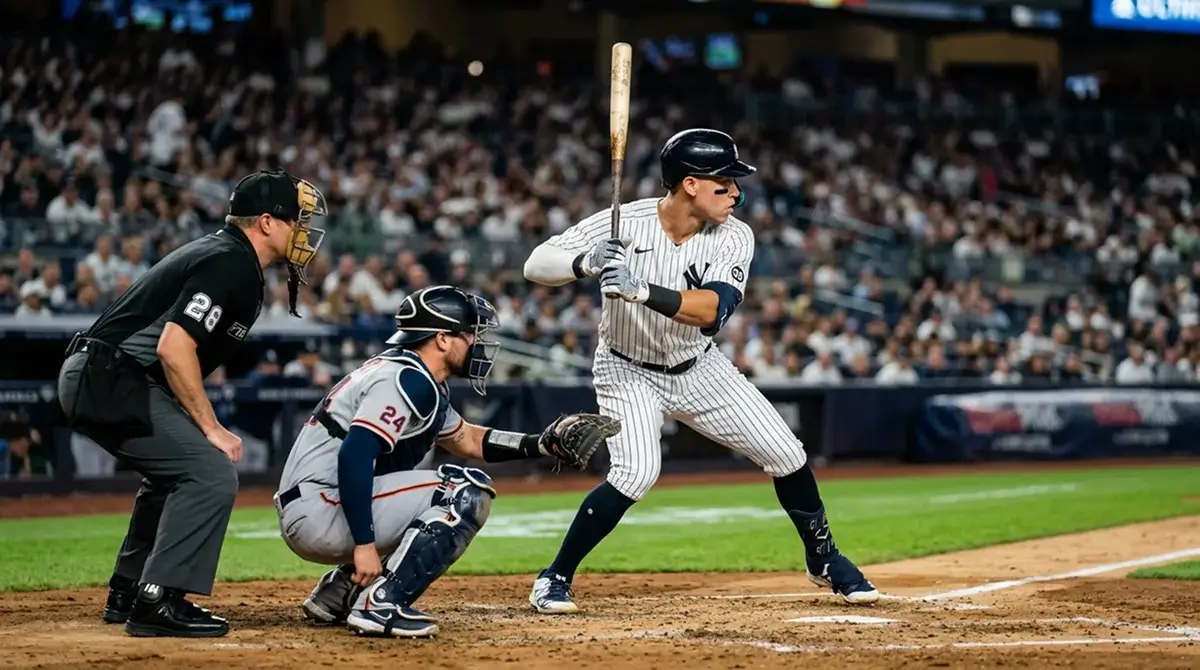
UK In-Play Live Baseball Betting Markets
 Available in US

The first time I placed a live baseball bet, I was watching a Mets game on a Tuesday night, saw the starting pitcher load the bases with nobody out in the third inning, and hammered the other team’s live moneyline at a price that looked absurdly generous. The pitcher escaped with a double play and a strikeout. I lost. But the logic was sound, and that is the addictive tension of in-play baseball betting — the game gives you information in real time that the pre-match line could not anticipate, and your job is to interpret it faster and better than the bookmaker’s model recalibrates.
Live betting now accounts for 53.4 per cent of all online betting activity globally, and that share is growing at nearly 15 per cent annually. Baseball is particularly well-suited to in-play markets because the sport’s structure creates natural pause points — between pitches, between at-bats, between innings — where odds update and bettors can assess their positions. Unlike football, where play is continuous and live odds adjust in a blur, baseball gives you discrete moments to think, evaluate, and act.
For UK bettors, the challenge is less about understanding the concept and more about navigating the practical realities: time zones, market depth at UK bookmakers, mobile platform speed, and the discipline required to avoid impulsive bets when you are watching a game at midnight and your adrenaline is running. This guide covers all of it — the markets available, the timing windows where edges emerge, and the tactical framework that turns live betting from gambling into an analytical exercise.
Since in-play markets move rapidly, knowing exactly how to watch MLB from the UK without broadcast delays is crucial for timing your bets.
Table of Contents
- MLB In-Play Markets At UK Bookmakers
- Key Timing Windows: When In-Play Odds Shift the Most
- Reading Momentum Mid-Game: Pitcher Changes, Rally Signals, and Run Expectancy
- Mobile Betting Platforms: Speed, Latency, and UK App Comparison
- Combining Pre-Match Research with Live Execution
- Risks Specific to In-Play Baseball Betting
- Live Betting as a Skill, Not a Spectator Sport
MLB In-Play Markets At UK Bookmakers
Not all UK bookmakers treat live baseball equally. Some offer a deep in-play menu with moneyline, run line, totals, inning-by-inning markets, and next-batter props. Others provide a bare moneyline that updates every few minutes and little else. The difference matters because your ability to find value in-play depends directly on the granularity of markets available.
The core in-play markets you should expect at any bookmaker covering MLB are the live moneyline (updated continuously based on score and game state), the live total (adjusted as runs score and pitching changes occur), and the live run line. Beyond those three, the menu varies. Some operators offer inning-specific markets — the winner of the current inning or whether the current inning produces a run. Others offer next-batter outcomes: will the current batter reach base, strike out, or hit a home run? These micro-markets are where the most active in-play bettors operate, but they are also the markets most affected by latency — more on that shortly.
Mobile devices generate over 53 per cent of online gambling revenue globally and above 80 per cent in the US market. That mobile dominance is even more pronounced for live betting, where the entire value proposition is speed and access. If you plan to bet baseball in-play from the UK, your phone is your primary tool, not your laptop. The bookmaker’s mobile app — its speed, its market depth, its interface clarity — is functionally your trading platform. Evaluate it with the same scrutiny you would apply to any tool you depend on for real-money decisions.
One market that UK bettors often overlook in-play is the alternate total. If the pre-match total was set at 8.5 and the game is 4-3 after four innings, the live total might sit at 10.5 or 11. But if your read on the remaining pitching matchup — perhaps both bullpens are fresh and deep — suggests scoring will slow down, the over on the pre-match total is already cleared while the live under at 10.5 might carry genuine value. These cross-reference opportunities between the original line and the live line are where experienced in-play bettors find their edge.
Key Timing Windows: When In-Play Odds Shift the Most
Baseball odds do not shift uniformly across nine innings. There are specific moments where the live line overreacts or underreacts to game events, and recognising those moments is the difference between smart in-play betting and chasing prices.
The biggest single-moment shift happens when a starting pitcher exits the game. Bookmaker models are heavily anchored to the starting matchup, and when a starter is pulled earlier than expected — whether due to poor performance, a high pitch count, or an injury — the live odds recalibrate dramatically. The window between the manager walking to the mound and the relief pitcher finishing his warm-up throws is the most volatile 90 seconds in live baseball betting. If you have done your homework on the bullpen depth and recent usage for both teams, you can assess the reliever matchup faster than the model adjusts, particularly if the incoming reliever has a sharp platoon split against the upcoming hitters.
The second key window is the transition between the fifth and sixth innings. At this point, roughly 55-60 per cent of the game has been played, and the data available — actual pitching performance, lineup adjustments, bullpen availability — is far richer than what was available pre-game. The live moneyline at this stage reflects both the score and the projected remaining pitching matchup, and it is here that I find the most frequent disagreements between my assessment and the bookmaker’s line. A team trailing by one run heading into the sixth with their best bullpen arms available and facing the opponent’s weaker middle-relief options is often underpriced on the live moneyline.
The third window is less about a single moment and more about a pattern: the accumulation of base-running situations in an inning. When a team loads the bases with no outs, the live odds often overcorrect toward that team scoring multiple runs. Run expectancy tables — publicly available and stable from year to year — tell you that bases loaded with nobody out produces an average of about 2.3 runs. That is significant, but it also means roughly 15 per cent of the time, zero runs score. If the live odds have priced in a big inning as near-certain, the other side may carry value.
I keep a simple rule: never bet live in the first two innings unless the starting pitcher looks physically wrong — drastically reduced velocity, erratic command, body-language signals of injury. The sample is too small to make meaningful adjustments before the third inning. Let the game develop. Let the data accumulate. Then act. With over 2,430 regular-season games producing roughly 22,000 individual innings across an MLB season, the volume of timing opportunities is enormous — the challenge is not finding games to bet live, but choosing the right moments within the right games.
Reading Momentum Mid-Game: Pitcher Changes, Rally Signals, and Run Expectancy
“Momentum” in baseball is real, but not in the way most people think. Fans see a team string together three hits and declare the floodgates are open. Analytical bettors see the same sequence and ask: were those hard-hit balls or soft singles that found holes? The distinction matters because genuine offensive momentum — sustained quality contact against a tiring pitcher — produces different live betting signals than a lucky cluster of weakly-hit balls.
The single clearest momentum signal is a visible decline in the starting pitcher’s performance metrics mid-game. If a pitcher’s fastball velocity drops by 2 mph or more between the first and fifth innings, and his command is deteriorating (more balls, fewer first-pitch strikes), that is a concrete indicator that he is losing effectiveness. This is information you can observe in real time through live pitch-tracking data available on multiple free platforms. The bookmaker’s algorithm sees the same data, but it weights recent pitches against the pitcher’s season-long baseline. If you judge the decline as more severe than the model does — because you recognise a mechanical issue the model treats as noise — you have a live betting edge.
Pitching changes are the single most actionable momentum event. When a manager brings in a reliever to face a lineup that has the platoon advantage, the in-play odds should adjust accordingly — and they usually do, but not always quickly enough. Relief pitchers also carry their own variance: a closer who has pitched three of the last four days is a fundamentally different proposition than the same closer on full rest. The boxscores from the previous two games — which take three minutes to check — give you information the average live bettor ignores.
What I actively resist is betting on “feel.” A team that just hit back-to-back home runs feels unstoppable, but two home runs do not change the probabilities for the next at-bat. Each plate appearance is largely independent. The emotional pull of momentum is exactly what the bookmaker exploits in live pricing — they know recreational bettors pile onto the side that just scored, so the live odds on the other side often represent better value immediately after a scoring event than they did two minutes earlier.
Rain delays add another dimension to momentum reading. When a game is paused for 30-60 minutes mid-game, the starting pitcher who was cruising often returns with diminished command. Bullpens may need to be deployed earlier than planned. If a rain delay interrupts a game where one starter was dominant, the live odds might not fully account for the disruption to that pitcher’s rhythm. I have found small but consistent edges in betting against the dominant starter’s team immediately after a lengthy rain delay, particularly if the delay forces an earlier-than-expected bullpen transition.
Rely on our top MLB betting platform to find the most competitive live odds during the game.
Mobile Betting Platforms: Speed, Latency, and UK App Comparison
I have placed live baseball bets on three different bookmaker apps in the same evening and watched identical odds update at noticeably different speeds. Latency — the delay between an in-game event and the app reflecting new odds — varies across platforms, and in live betting, that delay is the gap between value and stale pricing.
The features that matter most for baseball in-play are odds-update speed, one-tap bet placement (minimising the number of screens between decision and execution), and in-app streaming or at minimum live match trackers that show pitch-by-pitch progress. Some UK apps offer split-screen views where you can watch a live stream and see the bet slip simultaneously. That integration is not a luxury — it is the minimum viable setup for serious in-play betting on a sport where game state changes with every pitch.
Push notifications deserve a mention because they serve a specific function for UK-based MLB bettors. Most MLB games start between 11 PM and 1 AM UK time. If you have done your pre-match analysis and identified a game where you want to bet live at a specific trigger point — say, after the fifth inning if the starting pitcher is still in — a push alert for pitching changes or score updates means you do not need to stay glued to your screen for three hours. Set the alert, get the notification, assess the live line, and act. That workflow respects both your sleep schedule and your analytical discipline.
Cash-out functionality also varies dramatically across apps for live baseball. Some bookmakers offer partial cash-out, letting you lock in a portion of your live bet while leaving the rest to run. Others only offer full cash-out, or restrict it to certain markets. Before the game starts, check whether your bookmaker supports cash-out on the specific market you intend to bet live. Discovering mid-game that you cannot exit a losing position is a lesson you only want to learn once.
One practical tip from hard experience: test your bookmaker’s live baseball interface during a game you have no intention of betting on. Place a small bet, observe how quickly odds update after a scoring event, check how many taps it takes to navigate from the live match tracker to the bet slip, and see whether the app freezes during high-activity moments. That ten-minute test saves you from discovering these issues when real money and a genuine edge are on the line.
Combining Pre-Match Research with Live Execution
The best live bettors I know do not treat in-play as a separate activity from pre-match analysis. They treat it as the execution phase of research that started hours earlier. The workflow looks like this: before the game, you identify the matchup, assess the pitchers, note the bullpen availability, and form a thesis. Then you define the live trigger that would confirm or contradict that thesis.
Brad Szalach of LegalSportsReport put it well: “Tracking your results may sound tedious, but it can help you improve your game, spot weaknesses and make critical budgeting decisions.” That advice applies doubly to live betting, where the temptation to deviate from your plan is constant. If you walked into the game believing the under was the play because both starters looked sharp, and the first three innings produced six runs, your thesis is challenged. The disciplined response is to reassess: did the runs come from genuine offensive dominance, or from a few lucky breaks? If the quality-of-contact data still supports low scoring going forward, the live under at a now-inflated total might be an even better bet than the pre-match under was.
The worst version of combining pre-match and live is using pre-match analysis as an excuse to chase. “I thought this team would win, they are losing 3-1 in the fifth, but my analysis said they should win, so I will double down live.” That is not combining — that is rationalising. If your pre-game thesis required the starting pitcher to dominate and he has allowed three runs in four innings, the thesis is dead. Accept it. Move on to the next game.
A more sophisticated approach is what I call “conditional pre-sets.” Before the game, I define two or three specific scenarios that would trigger a live bet. For example: “If the total is still under 4 after five innings and both starters are still in, I will bet the under on the live total.” Or: “If Team A’s starter is pulled before the sixth inning and their bullpen pitched 5-plus innings yesterday, I will bet Team B’s live moneyline.” These pre-sets keep my live betting anchored to analysis rather than emotion, and they give me a clear go/no-go framework when the game reaches those decision points.
The discipline required is higher than pre-match betting because the feedback loop is immediate. You place a live bet and see the result within minutes, not hours. That speed creates a psychological pull toward placing the next bet immediately — whether it is a revenge bet after a loss or an overconfident follow-up after a win. Having a pre-defined number of live bets per evening (I cap myself at three) is a simple guardrail that prevents the speed of feedback from overwhelming your process.
Risks Specific to In-Play Baseball Betting
Live baseball betting carries risks that do not exist in pre-match betting, and pretending otherwise is how bankrolls disappear in a single evening. The most dangerous risk is overtrading. With 15 games on a typical weeknight slate, each offering continuous in-play markets for three-plus hours, the volume of betting opportunities is practically infinite. Without strict rules about which games and which moments you will engage with, you end up placing far more bets than your edge justifies.
The second risk is latency exploitation in reverse. Bookmakers have invested heavily in automated trading systems that can suspend and adjust markets in milliseconds. You, on a mobile app with consumer-grade internet, are structurally slower. There are moments where the odds you see on screen are already stale by the time you tap “confirm.” This is not a conspiracy — it is the mechanical reality of live betting. Accepting that you will occasionally miss the price or have a bet rejected is part of operating in this market. UK Gambling Commission data from Q3 2025-26 showed that GGY from real-event betting fell 18 per cent to £530 million, with active accounts down 7 per cent. Part of that decline reflects bettors recognising that the live betting environment favours the operator’s speed advantage more than it used to.
The third risk is cognitive fatigue. Betting on a sport that starts at 11 PM UK time and runs until 2 AM means you are making real-money decisions when your decision-making capacity is lowest. I have a hard rule: no live bets after 1 AM regardless of what the game state looks like. The edge I might find at 1:30 AM is almost certainly smaller than the judgement deficit I am operating with at that hour. Set your own curfew and enforce it.
Live Betting as a Skill, Not a Spectator Sport
In-play baseball betting rewards preparation more than reaction time. The bettor who has done the pre-match work on pitching matchups, bullpen loads, and platoon splits enters the live market with a framework that most participants lack. The game then provides real-time information that either confirms or challenges that framework, and the live markets offer odds that reflect a blend of algorithmic recalibration and recreational money flowing in the wrong direction.
Your advantage as a UK bettor is not speed — you will never out-speed the algorithm. Your advantage is context. You know things about this specific game that the model weights generically: the bullpen’s workload over the past three days, the platoon mismatch in the seventh inning, the declining velocity on the starter’s fastball. Live betting is where that contextual knowledge converts into profit — if you have the discipline to wait for the right moment and the restraint to walk away when the moment does not come.
Which UK bookmakers offer the widest range of live MLB markets?
Market depth varies significantly across operators. The largest UK bookmakers typically offer live moneyline, run line, totals, and inning-specific markets for MLB. Smaller operators may only provide live moneyline and totals. Check the in-play section of your bookmaker’s app during a live MLB game to assess market depth before committing to that platform for live betting.
How quickly do in-play odds move during a baseball game?
Odds update with every pitch on most major platforms, with the most dramatic shifts occurring during scoring plays, pitching changes, and bases-loaded situations. Between pitches with no action on the bases, odds movement is minimal. The speed of update also depends on your bookmaker’s trading model — some use fully automated systems that adjust in real time, while others rely on semi-manual trading with slight delays.
Can I cash out a live baseball bet early?
Most major UK bookmakers offer cash-out functionality on live baseball bets, though availability depends on the specific market and game state. Cash-out values are calculated based on the current live odds and typically include a margin that favours the bookmaker. For moneyline and totals markets, cash out is usually available throughout the game; for niche in-play markets, it may be restricted or unavailable.
Prepared by the Betting on Baseball Games editorial staff.