Preseason Action With MLB Spring Training Betting UK
 Available in US

Every February, MLB teams gather in Florida and Arizona for six weeks of exhibition games that look like baseball but behave nothing like the regular season. Star players bat twice and sit down. Prospects who might never reach the majors pitch three innings. Lineups change halfway through the game without explanation. And yet, some bookmakers post lines on these contests, and some bettors — against their better judgment — play them. I have been both the bettor who lost money on spring training games and the one who learned to use the period as a research window instead. The second version is considerably more profitable.
UK Bookmaker Preseason Lines And Spring Training Markets
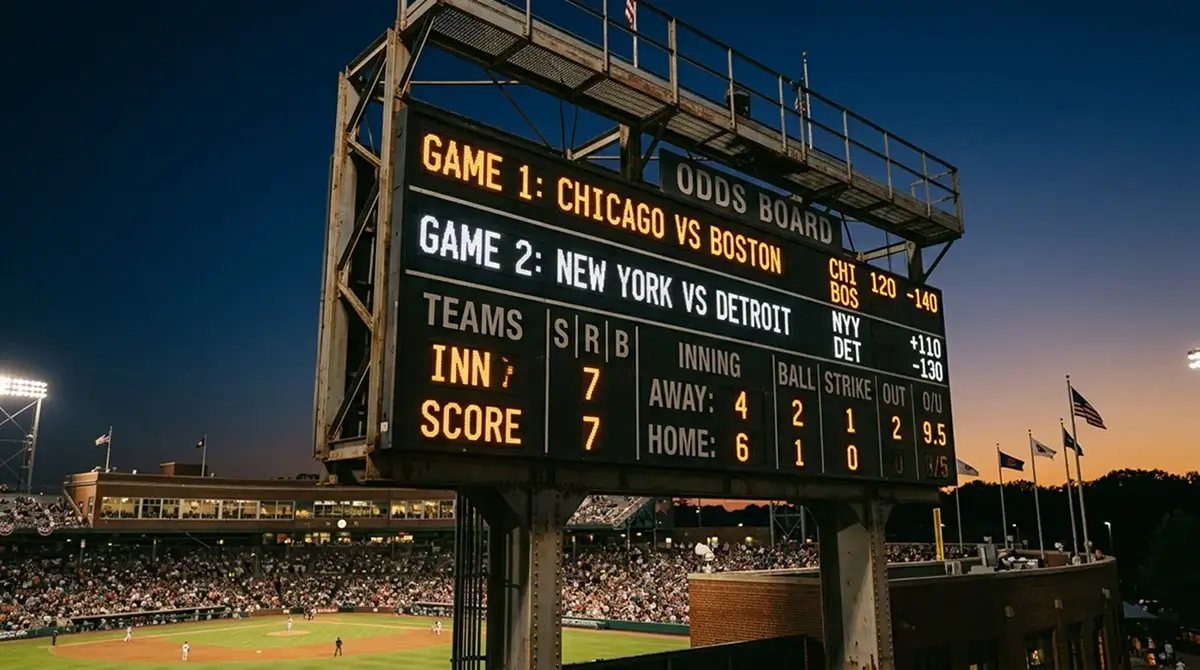
Coverage of spring training at UKGC-licensed operators is inconsistent and limited. During the Grapefruit League (Florida-based games) and Cactus League (Arizona-based games), a handful of the larger operators post moneylines on selected spring training contests. Totals are sometimes available; run lines and props almost never are.
The lines that are posted come with important caveats. Margins are wider than regular-season lines — often significantly so. A regular-season MLB moneyline might carry a combined overround of 104-105%. A spring training moneyline can push 108-110%. The bookmaker is compensating for the inherent unpredictability of exhibition games where neither team is trying to win in any meaningful sense.
I check spring training availability at my primary operators each February but rarely bet. The value proposition is poor: wider margins on more unpredictable outcomes is the mathematical opposite of what I look for in a betting market. If you do bet spring training, treat it as entertainment with minimal stakes, not as part of your analytical approach to the regular season.
Liquidity is thin. Some operators withdraw spring training lines entirely if sharp money hits them early, because the cost of getting beaten on a poorly calibrated exhibition line exceeds the revenue from the handful of recreational bets those markets attract. I have seen lines pulled mid-morning after a single substantial bet moved the price — a clear sign that the bookmaker’s confidence in its own number was low to begin with.
Why Standard Models Break Down During Spring Training
My regular-season model is built on Pythagorean expectation, pitcher matchups, and splits data — all of which require stable inputs. Spring training destroys every one of those inputs.
Lineups are experimental. A team’s Opening Day starting nine might play together once or twice during the entire spring. Starters bat in different lineup positions, prospects fill in at key spots, and platoon advantages are irrelevant because managers are evaluating talent, not optimising matchups. Your lineup-quality projections, built on regular-season data from the previous year, have no predictive power when half the batting order consists of minor leaguers.
Pitchers are building up. Starters throw 2-3 innings in early spring, gradually extending to 5-6 by late March. A starter’s spring ERA is meaningless because the inning sample is tiny, the opponents include non-MLB hitters, and the pitcher is not throwing his full pitch mix at full intensity. Using spring ERA to project regular-season performance is one of the most common beginner errors I see — it confuses practice with competition.
Teams have different agendas. Some managers use spring training to experiment with new defensive alignments or batting orders. Others use it to give veterans rest and evaluate fringe roster candidates. The game outcome is genuinely irrelevant to both teams, which means the motivational inputs that drive regular-season results are completely absent. You are betting on a contest where neither side is trying to win — and any model built on the assumption that teams are trying to win will misfire.
Even late spring training games — often cited as “more meaningful” because rosters are closer to Opening Day form — carry hidden distortions. Managers may pull starters after four innings to manage workload, regardless of the score. Lineup regulars might sit out the final week to avoid injury risk. Bullpen arms might be used in deliberately high-stress situations as a test, not because the game demands it. The incentive structure is fundamentally different from any regular-season game, and that difference makes spring training results statistically unreliable for projecting what comes next.
Using Spring Training as a Research Window, Not a Betting Window
Here is where spring training becomes genuinely valuable: observation. Six weeks of exhibition baseball is six weeks of data about roster construction, pitching mechanics, new acquisitions, and tactical changes — all available before the regular-season lines open.
I use spring training to answer five questions that shape my early-season regular-season bets. First, which new acquisitions are integrating well? A free-agent starting pitcher who commands his new pitch mix with confidence in March is more likely to perform in April than one who looks uncomfortable. Second, which young pitchers are earning rotation spots? A prospect who dominates spring competition and earns the fifth starter role changes the team’s pitching profile for the first six weeks. Third, which veterans are showing signs of decline? Velocity drops, mechanical changes, or reduced playing time during spring can signal problems that will manifest in April.
Fourth, which teams have changed their tactical approach? A team that spent the winter acquiring speed and small-ball specialists might play a different style than its previous-season data suggests. Observing that shift during spring — more stolen base attempts, more bunts, different defensive positioning — lets you adjust your models before the market catches up. Fifth, which bullpens have improved or deteriorated? Bullpen composition changes dramatically between October and March — trades, signings, injuries, and retirements reshape the relief corps. Spring training reveals the new pecking order.
None of this observation requires placing a bet. It requires watching games (many are streamed free on MLB.tv during spring), reading beat reporters’ daily notes, and updating your pre-season projections based on what you see. By Opening Day, you should have a more informed view of each team than the bookmaker’s algorithm, which relies primarily on previous-season data and off-season transaction logs.
The regular season spans 162 games per team — a grind that rewards preparation. Spring training is your preparation period. Using it to identify futures value before prices compress is the highest-return application of that six-week window.
Are spring training game results a reliable predictor of regular season performance?
No. Spring training records have almost no correlation with regular-season performance. Teams rest key players, experiment with lineups, limit pitchers’ innings, and do not manage games to win. A team that goes 22-8 in spring may finish .500 in the regular season, and vice versa. The value of spring training for bettors lies in observation — watching how teams are constructed and how individuals are performing — not in treating exhibition results as predictive data.
Do spring training totals tend to run higher or lower than regular season?
Spring training totals tend to be erratic rather than consistently high or low. Early-spring games with limited pitcher innings and prospect-heavy lineups can produce high scoring. Late-spring games where starters pitch 5+ innings often mirror regular-season run environments. The unpredictability itself is the problem — there is no stable pattern to exploit, which is why totals betting on spring training games is analytically unreliable.
Written by the editors at Betting on Baseball Games.