Plus Odds Value And MLB Underdog Betting Strategy
 Available in US
In 2024, the best team in baseball won 62% of its regular-season games. The worst team won 38%. That gap — smaller than in almost any other major sport — is the structural foundation of underdog betting in baseball. Even a bottom-tier team wins four out of every ten games it plays. The question is not whether underdogs win; it is whether the price you are getting compensates for the times they lose. Over a 162-game season with 2,430 total games, the answer is often yes.
Baseball’s built-in variance is what makes the sport special for bettors willing to swim against the current. The favourite does not cover at the rate the public assumes, and the underdog does not lose as often as the price implies. My approach to underdogs is systematic, not sentimental — I am not backing the little guy for the story, I am backing a mispriced probability.
Public Bias And MLB Underdog Win Rates
After a decade of tracking my own underdog bets, I can tell you the single biggest reason underdogs are persistently undervalued: the public overestimates the distance between good teams and mediocre teams.
In football, the best Premier League side might win 80% of its home matches. In basketball, a dominant NBA team can win 75%+ of regular-season games. In baseball, the ceiling is around 62-64%. The floor is around 36-38%. That compression exists because baseball outcomes are heavily influenced by random variation — a seeing-eye ground ball, a gust of wind, a borderline umpire call. Over 162 games, talent wins out. In any single game, chance is a powerful equaliser.
The starting pitcher is the great leveller. A mediocre team with an elite ace on the mound is a genuine threat to any opponent. When a team’s number-one starter faces a rival’s number-four or five starter, the talent gap at the most influential position can flip the overall matchup. Recreational bettors see the team name, check the standings, and bet the favourite. Sharp bettors see the pitching matchup and bet the value.
Americans legally wagered $166.94 billion on sports in 2025, with baseball representing a major share of that handle. The sheer volume of recreational money flooding MLB markets creates systematic mispricing — favourites are over-bet because they feel safe, and underdogs are under-bet because losing feels worse even when the price compensates for the risk. That imbalance is the underdog bettor’s edge.
Qualifying Underdog Spots: Pitcher Mismatch, Division Rivalry, and Travel
Not every underdog is a value play. The last-place team trotting out their worst starter against a division leader’s ace is an underdog for good reason, and the plus-money odds reflect genuine inferiority. The skill is qualifying which underdog spots offer a probability advantage over the market price.
The highest-confidence underdog filter is the pitcher mismatch in the wrong direction — when the underdog’s starter is significantly better than the favourite’s starter. This happens more often than casual fans realise, especially in series where teams rotate their pitching staff. A team that won last night behind its ace might be a heavy favourite again today despite sending a back-of-the-rotation arm to the mound. The residual favouritism from the previous game’s result bleeds into the next day’s pricing, and the underdog — now armed with a superior starter — is mispriced.
Divisional rivalry is my second filter. Teams in the same division play each other roughly 19 times per season. By mid-summer, they know each other’s tendencies, pitching patterns, and bullpen sequencing intimately. Familiarity compresses the talent gap. A last-place divisional rival is more dangerous to a first-place team than a similarly ranked team from the other league because the scouting advantage narrows the quality difference. I weight divisional underdog spots approximately 5% higher than equivalent non-divisional matchups.
Travel and schedule spots create the third filter. Baseball teams play nearly every day for six months. Fatigue accumulates invisibly. A favourite flying cross-country overnight after a late-finishing extra-innings game is vulnerable the next afternoon — especially if the underdog is coming off a rest day at home. Day games following night games, the first game of a road trip, and the series after a long homestand are all situational factors that nudge the real probability closer to the underdog than the market implies.
I use all three filters simultaneously. A spot that qualifies on one filter is interesting. A spot that qualifies on two is actionable. A spot that qualifies on all three is a strong play.
Public Money Bias: How Recreational Bettors Inflate Favourite Prices
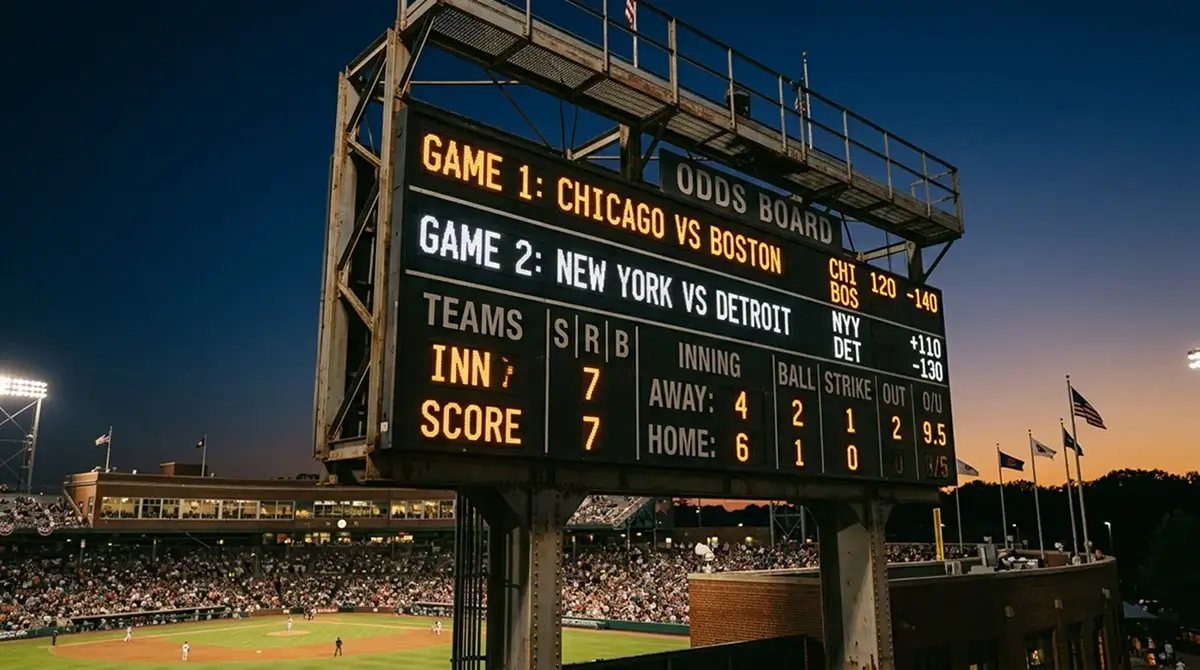
Here is the mechanism that creates the underdog edge at a market level: recreational bettors disproportionately back favourites. This is not speculation — it is observable in public money data, where favourites routinely attract 60-75% of bets on MLB games. When most of the money is on one side, the bookmaker adjusts the line to balance exposure, which shortens the favourite’s price and lengthens the underdog’s price. The underdog becomes more valuable not because the team got better, but because the market moved away from fair value.
This effect is strongest on nationally televised games, in marquee matchups, and when a team is riding a winning streak. The public loves narratives — a team that has won six in a row “feels” like it should keep winning. In reality, win streaks have almost no predictive value for the next game. The starting pitching matchup resets every day, and yesterday’s momentum does not carry over to a fresh pitcher on the mound.
I actively look for spots where public money is heavily one-sided — 70% or more on the favourite — but the line has not moved or has moved toward the underdog. That divergence between bet count and line movement is called reverse line movement, and it is a signal that sharp money is on the underdog side. When the public and the sharps disagree, I side with the sharps.
One practical note for UK bettors: public money data is primarily available from US-focused sources and reflects the American betting market. The UK market on MLB is smaller and may not perfectly mirror the same biases, but the line-setting process at UK bookmakers is influenced by global market movements. If the US line moves, UK lines typically follow. So the public money signal, even though it originates across the Atlantic, is still relevant to the price you see at your UKGC-licensed bookmaker.
Underdog betting is not about contrarianism for its own sake. It is about recognising that a 162-game season, the strategic discipline to trust the process, and the structural compression of talent in baseball create a market where plus-money prices are systematically too long on certain qualifying spots. Find those spots, bet them consistently, and let the variance play out over the full season.
What is a reasonable win rate to target when betting MLB underdogs?
A long-term underdog-focused strategy typically wins between 42% and 48% of bets. The profit comes from the plus-money odds — you do not need to win more than half your bets to be profitable if your average price is +140 or longer. A 44% win rate at an average price of +150 decimal (2.50) produces a positive ROI. Track your results over at least 200 bets before drawing conclusions about whether your approach is working.
Should I bet underdogs on the moneyline or the run line?
Moneyline is the default for underdog plays because you only need your team to win outright. The run line (+1.5) offers shorter odds but a higher probability of cashing — your team can lose by one run and the bet still wins. Use the run line when you believe the underdog is competitive but unlikely to win outright, and the moneyline when you see a genuine upset opportunity where the plus-money price is the primary attraction.
Prepared by the Betting on Baseball Games editorial staff.