Analyzing Umpire Impact On MLB Betting Totals
 Available in US
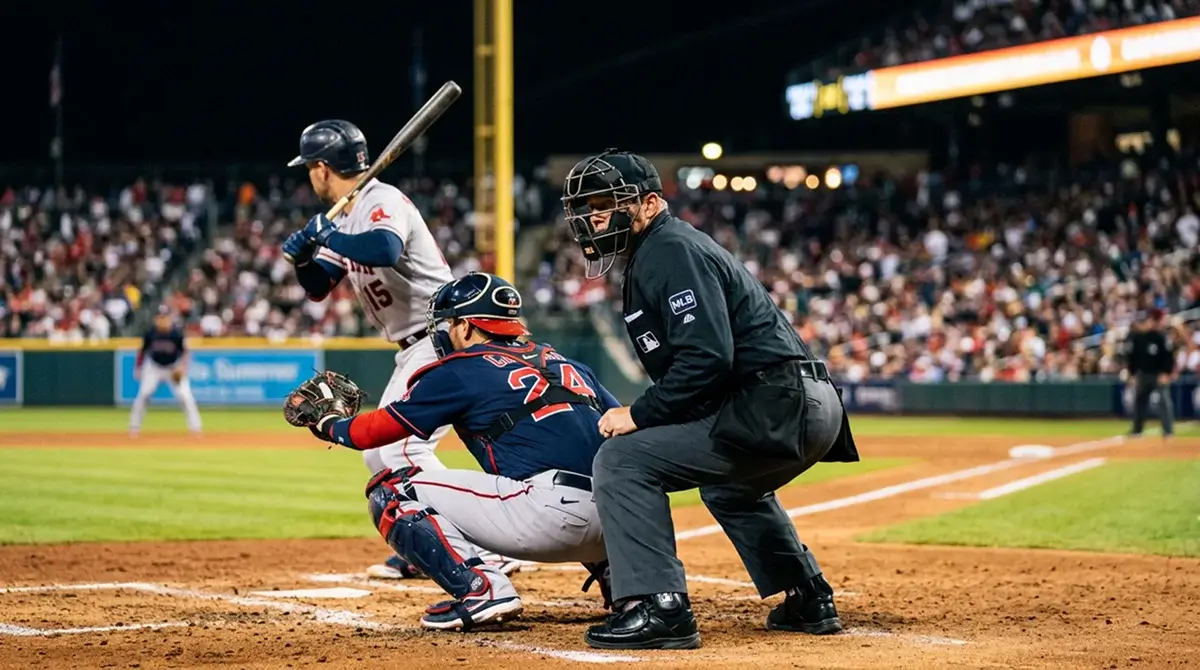
Most UK bettors never think about the man standing behind the catcher. They analyse the pitcher, the lineup, the park, the weather — and then completely ignore the one person who decides what counts as a strike. Every home plate umpire in MLB interprets the strike zone slightly differently, and those differences are measurable, consistent, and profitable if you know where to look.
I started tracking umpire data six years ago after losing a totals bet that should have been a comfortable under. The starting pitchers were dominant, the park was pitcher-friendly, the weather was cold. But the home plate umpire had the tightest strike zone in baseball that season — his called strike rate was 7% below the league average. Both pitchers fell behind in counts, hitters saw more pitches in the zone, and the game turned into a 9-7 slugfest. One variable I had ignored flipped the entire outcome.
MLB Umpire Strike Zone Variations And Betting Edges
The official MLB strike zone is defined by the rulebook: from the midpoint of the batter’s torso to just below the knees, over the width of home plate. In practice, no two umpires enforce that boundary identically. Pitch-tracking technology — particularly the Hawk-Eye system now used across all 30 ballparks — has made it possible to quantify exactly how each umpire deviates from the rulebook zone.
The variance is not trivial. In a typical season, the most generous umpire might call 5-8% more strikes on borderline pitches than the most restrictive umpire. That sounds like a small percentage, but a borderline pitch happens multiple times per at-bat. Across a nine-inning game with roughly 280-300 pitches, an umpire who expands the zone effectively turns 12-18 balls into strikes. That changes pitch counts, walk rates, strikeout rates, and ultimately run scoring.
Umpires with large zones — those who consistently call strikes on pitches that are slightly off the plate — tend to produce lower-scoring games. Pitchers can work the edges confidently, hitters expand their own swing zones to protect, and strikeout totals rise. Umpires with tight zones force pitchers to work inside the plate, give hitters more favourable counts, and generate more walks and hits. The run-scoring difference between the largest and smallest zones across a full season of games can exceed 0.7 runs per game.
The consistency of individual umpires is the part that makes this usable for betting. Umpire tendencies are remarkably stable from season to season. An umpire who was among the five most generous in 2024 is very likely to remain in the top tier in 2025. This persistence means historical data is genuinely predictive, unlike many baseball metrics that regress heavily.
Tight Zone vs Generous Zone: Direct Impact on Over/Under Lines
Here is a real scenario I bet into last season. Two mid-rotation starters, both with ERAs around 4.00, at a neutral park with moderate weather. The total was set at 8.5. My projection, based on pitching and lineup analysis, came to 8.4 — essentially a coin flip. Then I checked the umpire assignment: one of the tightest zones in the league. I adjusted my projection to 9.1 and took the over. The game finished 6-5.
The mechanism is straightforward. A tight-zone umpire forces pitchers to throw strikes over the centre of the plate to get called strikes. Pitches on the black — the edges of home plate — that would be called strikes by a generous umpire are called balls instead. Pitchers who rely on painting corners suddenly fall behind in counts. When pitchers are behind, they throw more hittable pitches. More hittable pitches mean more baserunners. More baserunners mean more runs.
The inverse is equally true. A generous-zone umpire expands the pitcher’s canvas. Borderline sliders that catch the outside corner get called strikes. Hitters cannot sit on their preferred pitch because the zone is wider. At-bats end earlier. Pitch counts stay lower. Starters go deeper into games, which means fewer bullpen innings — another factor that suppresses scoring. My adjustment model adds 0.3 to 0.5 runs per game for the tightest zones and subtracts the same for the most generous.
One additional angle: umpire impact is not symmetric between strikeout pitchers and contact pitchers. A generous zone amplifies strikeout pitchers more than contact pitchers because the K-pitcher benefits from having more borderline pitches called in his favour. When a dominant strikeout pitcher is paired with a generous umpire, the under becomes even more attractive than the zone data alone would suggest.
Where to Find Umpire Assignment and Tendency Data
Umpire assignments for MLB games are typically announced the evening before or the morning of the game. This timing matters — if you place your bet before the umpire is announced, you are missing a variable that can shift the total by half a run. I never bet a total before checking the umpire assignment.
Sportradar, which holds an exclusive 8-year data partnership with MLB covering a network of 800 bookmaker clients, feeds umpire data as part of its official data stream. Some of that data trickles down to free resources. Several websites compile umpire scorecards with metrics including called strike percentage above and below expected, games umpired, and the average total in games they work behind the plate. UmpScorecards on social media publishes individual game grades within hours of completion, creating a running database that is publicly accessible.
For UK bettors, the practical workflow is: check the umpire assignment the morning of the game (around lunchtime UK time for evening US east coast games), pull the umpire’s seasonal and career tendencies, adjust your total projection accordingly, and then compare to the posted line. If the umpire data pushes your projection meaningfully away from the market line, the bet has additional support. If the umpire data is neutral, it confirms rather than changes your existing view.
I keep a running spreadsheet of home plate umpire assignments with three columns that matter: called strike rate versus league average, average total in their games, and over/under record. After a couple of months, the patterns are unmistakable.
Automated Ball-Strike Systems: Will Robot Umpires Eliminate This Edge?
The Automated Ball-Strike system — ABS, commonly called “robot umpires” — has been tested in Minor League Baseball for several seasons and is gradually moving toward the majors. The full implementation of ABS would standardise the strike zone across all games and all umpires, theoretically eliminating the zone-variance edge I have described.
But “gradually” is the key word. MLB has introduced a challenge system — similar to VAR in football — where batters and pitchers can challenge called strikes and balls. This hybrid approach retains the human umpire as the primary caller while allowing electronic correction. The challenge system preserves some zone variance because umpires still make the initial call, and not every borderline pitch is challenged.
Even when full ABS eventually arrives, the transition period will create its own betting opportunities. If the standardised zone is tighter or more generous than the average human zone, league-wide scoring patterns will shift. Pitchers and hitters will need time to adjust their approaches. During that adjustment window, historical norms for run scoring will be unreliable, and bettors who understand the specific characteristics of the ABS zone will have an informational edge over those relying on outdated baselines.
For now, the human element remains fully in play. Umpire analysis pairs naturally with pitcher evaluation — a great pitcher working with a generous umpire is a more dominant combination than either factor alone. Until the robots fully take over, this edge is live and underused.
When are MLB umpire assignments announced before a game?
Home plate umpire assignments are typically confirmed the evening before or the morning of the game day. For UK bettors, this usually means the assignment is available by early afternoon UK time for games starting in the evening US time. Checking assignments before placing totals bets is essential — placing a bet without knowing the umpire is missing a variable that can shift the total by 0.3 to 0.5 runs.
Has the introduction of the ABS challenge system affected betting totals?
The challenge system has had a moderate impact where implemented. It corrects the most egregious miscalls but does not eliminate human zone variance entirely because the initial call is still made by the umpire, and challenges are limited in number. League-wide run scoring has shifted marginally in test implementations. As ABS expands, expect a transition period where historical totals data becomes less reliable until new baselines are established.
Prepared by the Betting on Baseball Games editorial staff.